
Preparing Children to Think, Make and Create
Craftsmanship Is a Way of Thinking
When a student works with wood, metal, electrical components, pipes or robotic parts, the learning goes far beyond the physical activity.
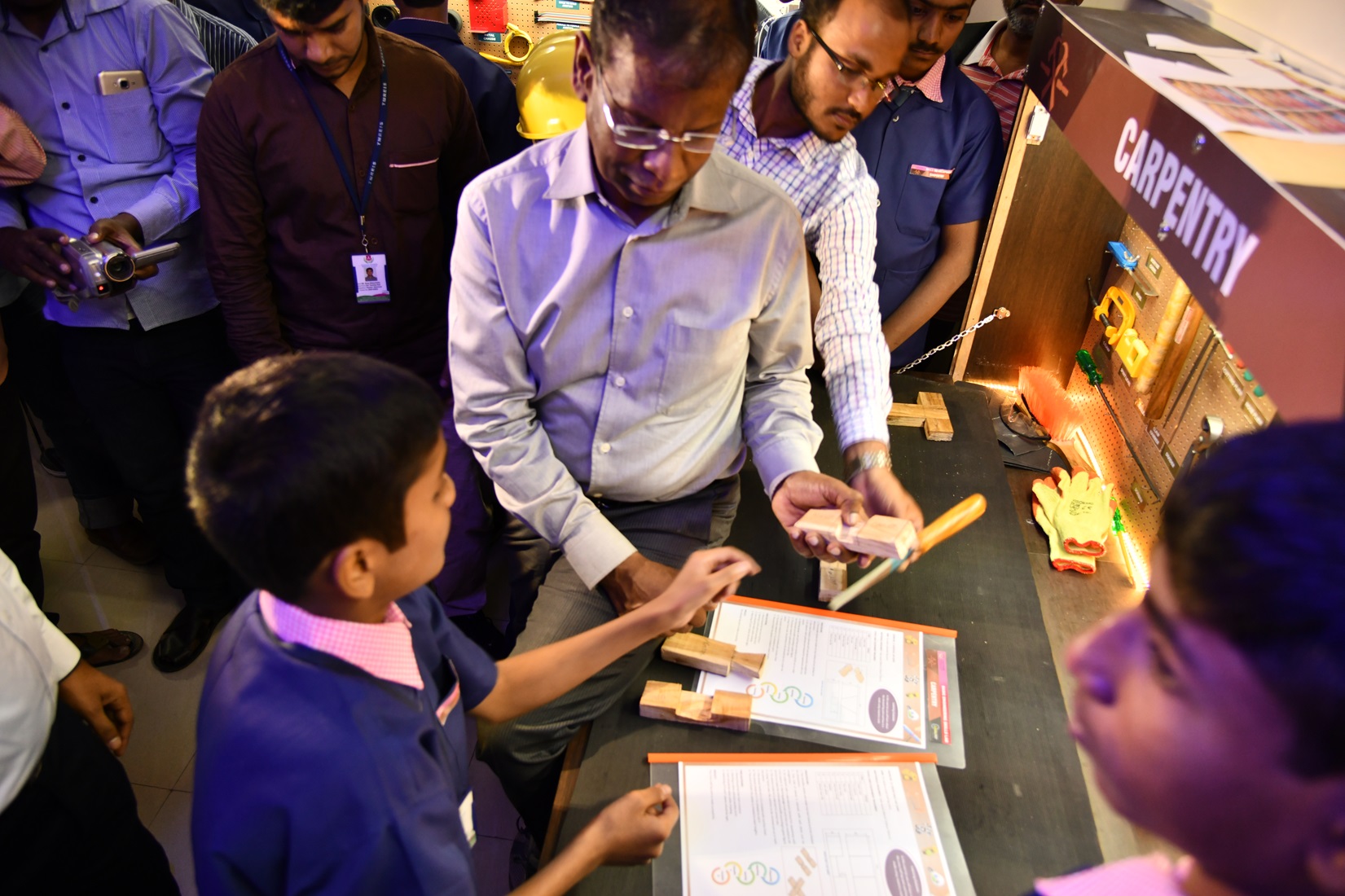
Consider a simple carpentry project. The student must understand dimensions, measure accurately, mark the material, select the appropriate tool, cut carefully, assemble the pieces and evaluate the final product. A small error in measurement can affect the entire project. In that process, the student is applying mathematics, spatial reasoning, planning, concentration and problem-solving.
The original Thinker’s Tools programme identifies measuring, calculating and designing as professional skills developed through practical activities, while also highlighting patience, perfection and hard work.
The workshop therefore becomes a classroom for developing both competence and character.
Carpentry in Thinker’s Tools Lab
Carpentry is an essential component of the Thinker’s Tools Lab project, introducing students to the practical skills of measuring, cutting, drilling, joining, and assembling wood. Through hands-on activities, students learn to plan their work, use tools safely, understand measurements, and transform raw materials into useful wooden objects.
Carpentry connects classroom learning with real-life applications. Students apply mathematical concepts such as length, dimensions, angles, and measurement while developing spatial awareness, logical thinking, and problem-solving abilities. They also learn to follow instructions, work with precision, correct mistakes, and improve their designs.
Within Thinker’s Tools Lab, carpentry encourages students to move beyond theoretical knowledge and experience the satisfaction of creating something with their own hands. It develops patience, discipline, creativity, responsibility, and respect for skilled work. By designing and building practical projects, students gain confidence, independence, and an appreciation of craftsmanship.
Thinker’s Tools Lab transforms carpentry into a learning experience where students think, design, build, test, and improve.
Electrical in Thinker’s Tools Lab
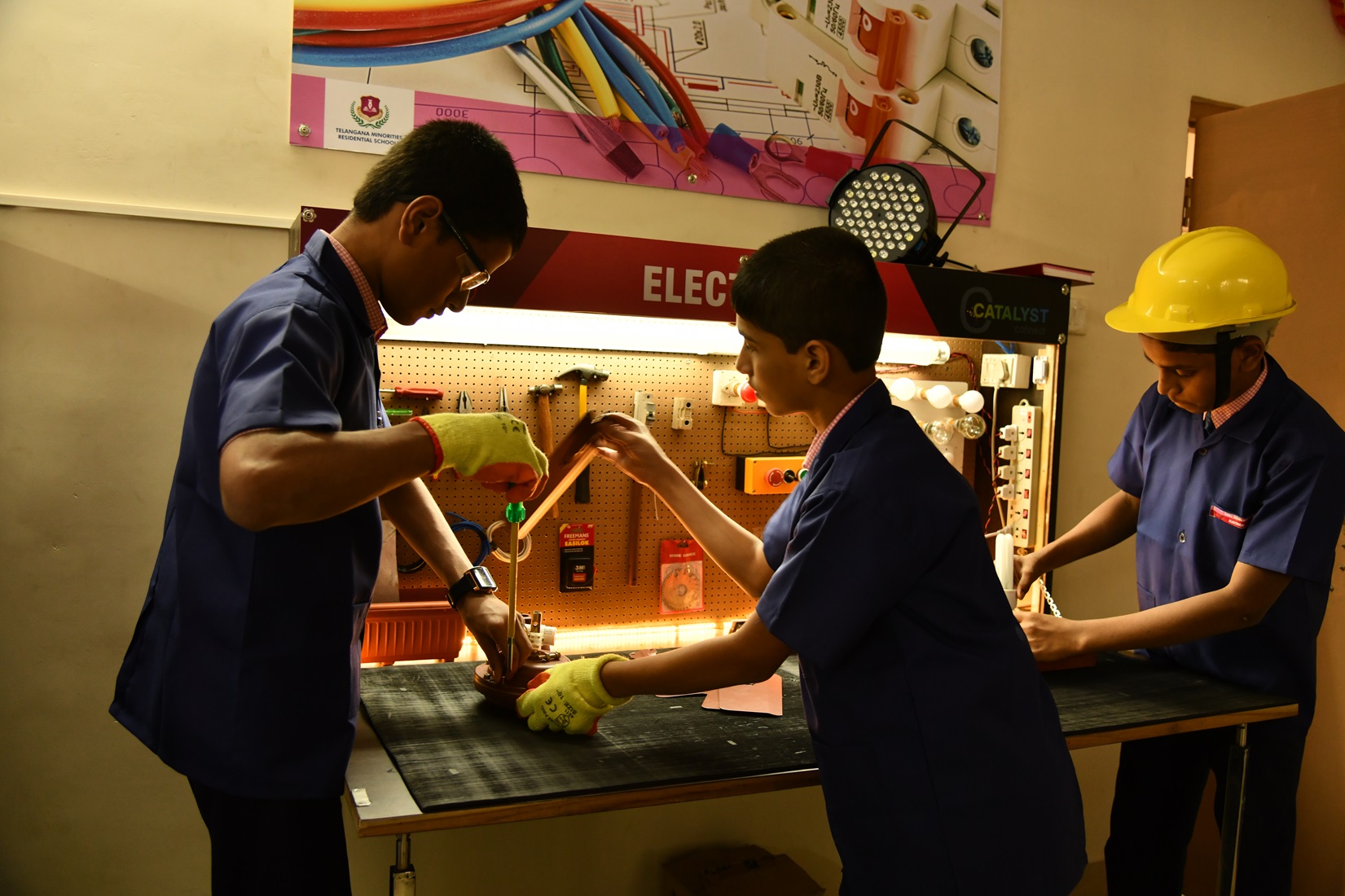
Electrical education is an important component of the Thinker’s Tools Lab project, helping students understand the principles of electricity through practical, hands-on learning. Students explore basic electrical concepts, circuits, components, electrical safety, and the functioning of simple appliances. Through guided activities, they learn how to connect components, construct simple electrical projects, and understand how electricity is used in everyday life.
Electrical activities connect classroom science with real-world applications. Students apply concepts such as current, voltage, and circuit connections while developing logical thinking, observation, and problem-solving skills. They also learn to follow instructions, identify errors, test their work, and improve their designs.
Within Thinker’s Tools Lab, electrical learning encourages students to move beyond memorising scientific concepts and experience how they work in practice. It develops curiosity, precision, confidence, and technical awareness while introducing students to the foundations of electrical engineering and technology.
Thinker’s Tools Lab transforms electrical concepts into practical learning experiences, enabling students to think, experiment, build, test, and innovate safely
Mechanical in Thinker’s Tools Lab
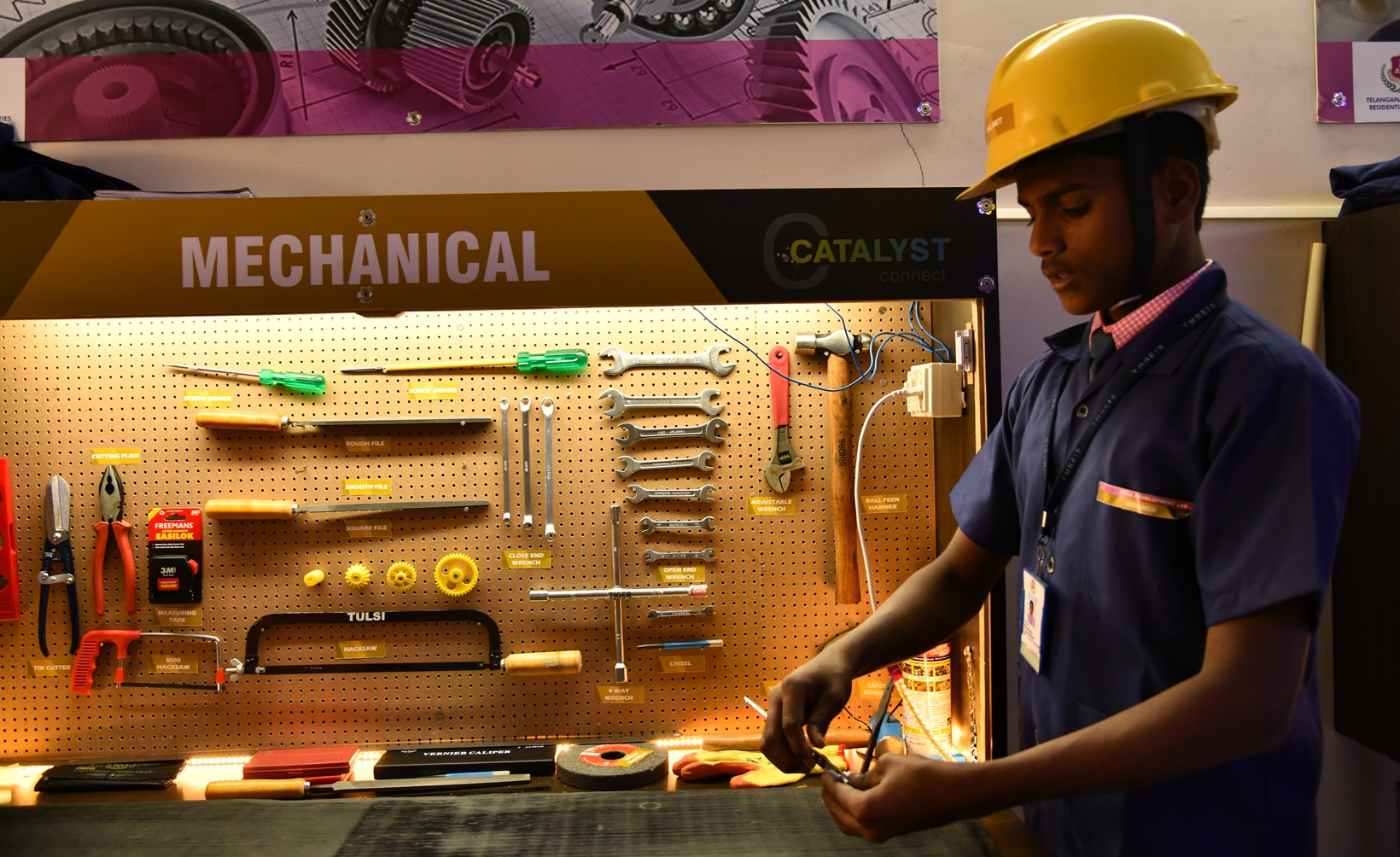
Mechanical education is an important component of the Thinker’s Tools Lab project, introducing students to the working principles of tools, mechanisms, gears, motion, and forces. Through practical, hands-on activities, students explore how different mechanical components work together to perform tasks and solve everyday problems. They learn to construct working mechanical models and understand the relationship between scientific concepts and their practical applications.
Mechanical learning connects classroom physics and mathematics with real-world experiences. Students develop an understanding of movement, force, simple mechanisms, and mechanical systems while strengthening their logical thinking, observation, and problem-solving abilities. By assembling, testing, and improving models, they learn to identify errors, explore alternatives, and refine their designs.
Within Thinker’s Tools Lab, mechanical activities encourage curiosity, creativity, precision, and independent thinking. Students gain confidence by transforming theoretical knowledge into functioning models and practical solutions.
Thinker’s Tools Lab makes mechanical learning engaging and meaningful, helping students think critically, build confidently, experiment purposefully, and develop the foundations for future technical and engineering skills.
Plumbing in Thinker’s Tools Lab
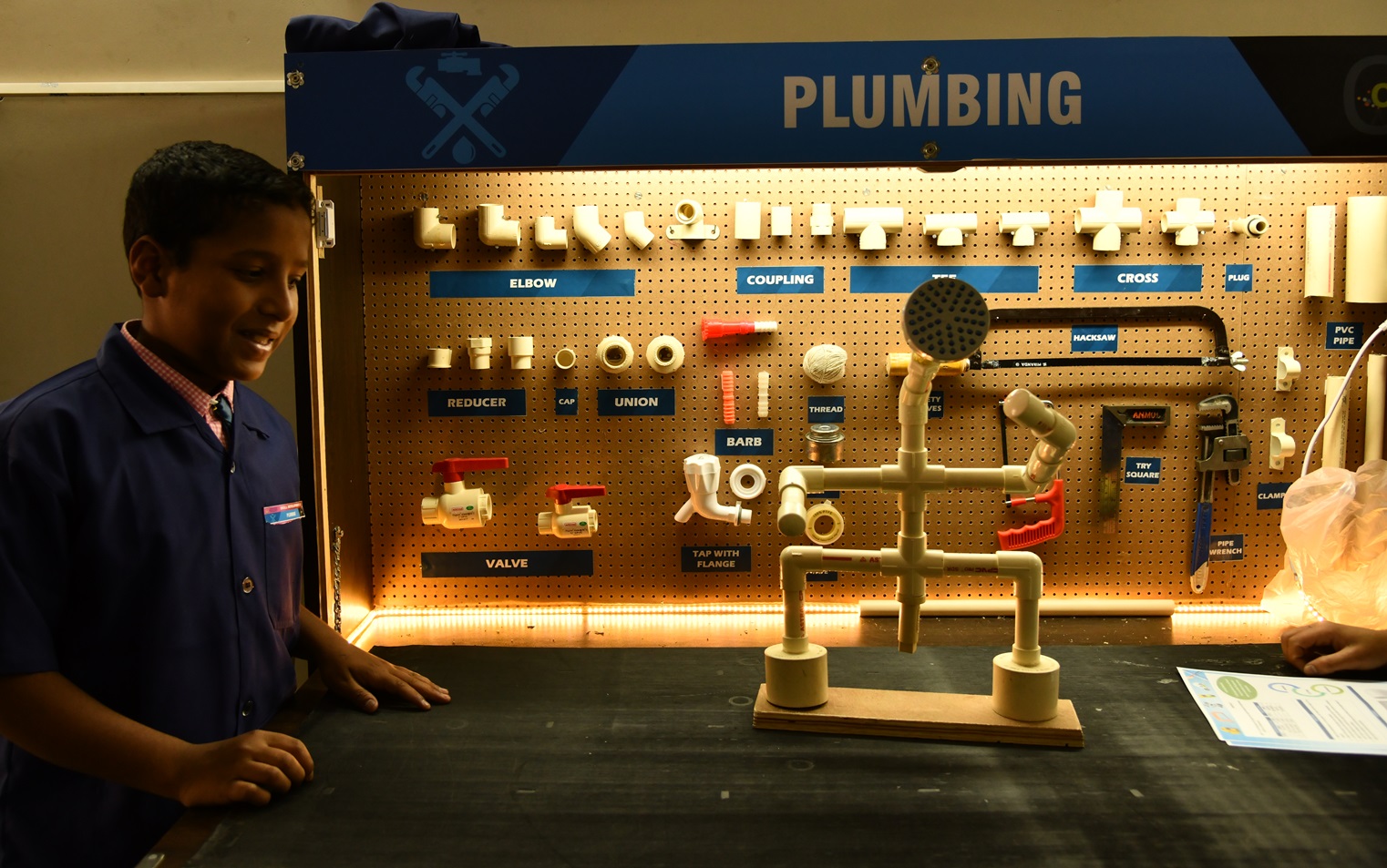
Plumbing is an essential component of the Thinker’s Tools Lab project, introducing students to the principles of pipes, joints, valves, connections, and water distribution systems. Plumbing is not limited to homes; it plays a vital role in industries, hospitals, commercial buildings, factories, agricultural facilities, and large infrastructure projects. Industrial plumbing systems support water supply, drainage, wastewater management, fluid transportation, and essential production processes.
Through hands-on activities, students learn how plumbing components work together to create functional systems. They develop an understanding of connections, water flow, leak prevention, and the importance of accuracy and safety. These activities connect classroom science and mathematics with practical applications, strengthening students’ problem-solving, observation, and design skills.
Within Thinker’s Tools Lab, plumbing encourages students to understand how essential systems operate in everyday life and industrial environments. By designing, assembling, and testing plumbing models, students develop practical skills, confidence, teamwork, and technical awareness.
Thinker’s Tools Lab transforms plumbing into experiential learning, preparing students to think practically, solve problems, and appreciate the engineering systems that support modern society.